Showing posts with label Phil Rowley Travel. Show all posts

Friday, August 12, 2016

Lago Strobel So What Equipment do I need to Bring?

Whenever you plan a trip the question, “What equipment or gear do I need to bring?” always arises. This question is magnified for a ‘bucket list’ trip or one that involves airline travel and the associated baggage restrictions, such as a journey to Lago Strobel.  One would hate to travel to Patagonia only to discover they brought the wrong rod and line or left the wading boots at home.  This post should help address any concerns for any Lago Strobel plans and dreams you might have.

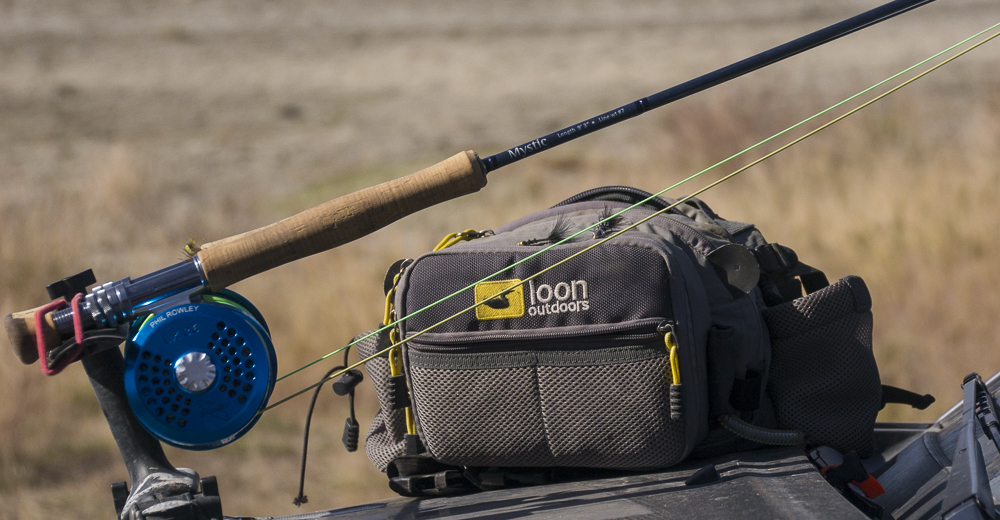
Two rods, floating lines, quality reels and a small kit bag serves you well on Lago Strobel
Rods: 

You will need at least one four-piece seven or eight weight rod.  I recommend bringing at least two rods. On my last trip, I managed to squeeze in three Mystic Tremor series rods.  The Tremor series is a fast action rod designed for windy saltwater flats and performed well.

Two rods, one seven weight and one eight weight, were always rigged and ready to go.  The third was simply along as a backup in case of an accident. Some might wonder about long a ‘switch’ rod to cope with the wind.  Based on my experience and talking to the guides, who spend the season on the water, a switch or two-handed rod isn’t necessary.  In fact, some of the Estancia Laguna Verde guides felt that the surface disturbance casting these rods creates actually works against you as you end up spooking fish.

Long casts are rarely needed
Long distance casts typically aren’t needed.  When there is any sort of surface chop and/or cloud cover Lago Strobel trout prefer to prowl the productive shoreline margins so short casts or angled casts intended to parallel the shore work best.  Long casts are only an advantage when the wind is low, the surface is calm and the sun is bright.  Under these conditions, trout become wary and may be reluctant to venture into the shallows choosing to stay out along the transition between shallow and deep water. Yes, there will be calm, warm, windless days during your stay.  Believe it or not, if the fishing gets tough you will be begging for any type of wind.  I kid you not.

Rods are always rigged and ready
Reels: 

Lago Strobel fish are large, robust and full of energy. Once hooked they are more than capable of taking you well into your backing, sometimes two or three times during the course of a fight.  Bring a good quality reel with a good smooth drag and at least 150 yards of backing.  Disc drag reels are preferred over conventional click and pawl systems.  If you can, bring at least two reels if you have them. I used Islander 3.8LX reels. They performed flawlessly.

Fly Lines:

Although I brought a cross section of fly lines you only need a floating line.  I also brought along Midge Tip, InTouch Camolux and  InTouch Hover lines but in the end, they were never called off the bench as a floating line met all my presentation needs.  If you want to work flies deeper or on a different presentation angle using a floating line I would recommend bringing a few Versileaders, in a cross section of sink rates.

When working off the deep rock bluffs or for fishing Booby's, Lago Strobel trout love Booby's, a fast sinking InTouch Deep 5 or 6 line is useful.

Working fast sinking lines and a Booby off a rocky shore
As I discovered early in my first week, Lago Strobel’s shoreline rocks are tough on fly line.  I had one become entangled around the calcium-encrusted rocks as it lay in the surf line at my feet. I ended up breaking it in my attempts to get it free.  Make sure to bring at least one spare of every line type you plan on bringing.

Line profile is also important.  As Strobel can be windy at times your floating line should or perhaps I should say must be designed to perform in the wind.  RIO’s InTouch Outbound Short and InTouch Xtreme Indicator are excellent choices. The new InTouch Big Nasty should also work well.  Make sure the line you choose is suited for temperate conditions to avoid memory issues.

I also recommend using low stretch, InTouch, lines.  Low stretch lines offer superior bite detection as not all Strobel takes are crunching. In addition, low stretch lines offer improved casting efficiency. Once a fish is hooked you can exert more pressure subduing the fish in less time while reducing potential stress.

When you pack any extra lines place them in marked Ziploc bags to avoid both weight and bulk.  Bring along a RIO Cranky and a spare line spool. If you wish to change lines, either by choice or necessity, the operation will take just a few minutes.

Tippet and Leaders:

Leader and tippet requirements are simple.  Bring Powerflex Plus tippet in 2X (12#) to 1X (15#) for dry flies.  Watching a monster trout slurp down a Chubby Chernobyl or crush a mouse pattern is a trip highlight.   For subsurface presentations, I used 0X (15#) pound Fluroflex Plus tippet.

Even though large bulky flies aren’t needed, leaders designed to turn over large flies in the wind work best. RIO Saltwater or Bonefish leaders work well.  I also had good success using Powerflex Plus Leaders.

You should have at least a half dozen leaders in the 10’ (Saltwater) to 12’ (Powerflex Plus) lengths.

As mentioned earlier in this post, having a few Versileaders in various sink rates is a good idea.

Other Equipment Considerations:

Sunglasses: 

As with all fishing excursions, quality polarized sunglasses are a must.  If possible, bring two pairs. A hat with a large bill that stays in place when the wind is up is recommended. Buffs are an excellent accessory for keeping the sun off your face and your hat on your head. Bring two if you can.

Wading Jacket and Waders: 

95% of the fishing on both Lago Strobel and the surrounding Lagunas takes place from shore. Although deep wading isn’t necessary or recommended you need waders and a wading jacket. Depending on the conditions, you may have waves crashing around and into you.  A wading jacket and waders keeps you warm and dry while providing relieve from the wind.

A wading staff helps navigate the rocky shallows
Wading Boots:  

Lago Strobel isn’t the place for lightweight wading boots. Good ankle support is critical due to Lago Strobel’s rocky shoreline. A combination of felt and studs or Vibram and studs provides sure footing.

General clothing: 

Lago Strobel sits at approximately 3000 feet above sea level. The weather is unpredictable and changes quickly. A layered philosophy works best. Even during mid-summer, it is possible to have a frost at night. In the fall late March into April, a wool hat is also recommended.  Rain, however, is unlikely at any time of year.


Having the right equipment makes all the difference
Sun Gloves: 

Sun gloves are also a welcome accessory. They keep the sun and wind off your hands. As with most Lago Strobel kit, a second pair is a welcome relief to replace a wet pair should it turn cool.

The only recommended equipment I haven’t mentioned, flies.  Don’t worry I will cover those in detail in a future entry.

Friday, July 29, 2016

Lago Strobel-Initial Impressions

My first view of Lago Strobel
As the crow flies, Lago Strobel (AKA Jurassic Lake) is just over the adjacent ridge from Estancia Laguna Verde but in order to get from the lodge to the lake requires a short 15-minute drive.  The road to Lago Strobel from Estancia Laguna Verde is a good a, although somewhat bumpy, two-wheel drive dirt road. As rocks abound in Patagonia our daily trek with our guide Martin was a bit of shake and bake experience.  Wildlife greeted us every day to and from the lake, guanaco, foxes, emu and a variety of raptors.

Guanaco were a daily sight
(Courtesy Barry Acton)
The lodge vehicles placed you on the best spots daily
The day after my arrival was to be our first of six straight on Lago Strobel.  As we pulled away from Estancia Laguna Verde my heart raced with excitement wondering what to expect when I saw Lago Strobel for the first time.  We stopped on the edge of plateau before beginning our decent down to Lago Strobel I took a large deep breath.  It was hard to believe I was actually looking at the lake after hearing so much about its rich tradition of large, fat, healthy rainbows.  Each following morning upon viewing the lake, my reaction never changed.  Some days we were greeted by a lake in full turmoil complete with strong winds, rolling waves and white caps, other days it was a light ripple and there were those days when the lake was mirror calm.  Although Patagonia and Lago Strobel in particular has a reputation for wind, a day on the water isn’t always a raging gale.  Although when the wind was up the lake tended to fish best.


Lago Strobel trout make their living prowling the shoreline
(Courtesy Barry Acton)
After taking a few pictures and video footage we began our decent down to Lago Strobel, a drop of some thirteen stories.  Originally guests had to walk down a series of narrow switch back trails to the lake.  I couldn’t imagine making that daily journey, especially the steep ascent at the end of a long day.  Now the guides drive you down to and along lake shore in new well maintained Toyota Hi Lux four-wheel drive trucks to destinations such as Camelot, Tasmania and Dry Fly Bay.  When the lodge first opened there were only a few spots you could access.  Now there is a network of roads that has opened up over 14 miles of lake shore diversifying the pressure and providing you with the mobility needed to cross paths with the trout of a lifetime.  In many instances the only time you saw another guest was when transiting from one location to another or when everyone met at a central location such as Sea Bay or Monster Bay for lunch.   The lodge does all they can to ensure a quality experience, food accommodation and their guide to client ratio, one guide for every two clients.

The rugged beauty of Lago Strobel
Lago Strobel is large, roughly ten miles long and eight miles wide.  Its crystal clear waters radiate a stunning azure blue.  The lake is extremely productive with a PH in excess of eight.  The shore line rocks are encrusted in calcium carbonate.  The white look the calcium coated rocks provide suggests the appearance of low tide.  If you kick at some of the smaller rocks they break open like an Easter egg revealing their solid inner core.  The calcium coated rocks provided good traction the wind and wave worn smooth larger rocks and boulders were always the ones to be careful off when walking or wading.  A wading staff is a recommended piece of kit for probing likely looking footholds while providing an extra level of stability. The submerged rocks resembled coral heads and were tough on fly lines.  A fact I found out within a few days.  I wasn’t paying attention to floating line.  The wave action wedged my line in the rocks subsequently shredding it in the process.  I soon learnt to pay attention where I placed my line with each strip of my retrieve.

Lago Strobel trout loved it when the wind was up
(Courtesy Barry Acton)
Lago Strobel’s key food source, scuds, utilizes the calcium rich water for the healthy development of their exoskeletons.  Calorie rich scuds are the key ingredient in the diet of Lago Strobel’s monster, 15-pound average, rainbows. Rolling over shoreline rocks reveals hundreds of #12-#16 olive to brown olive scuds.  When the waves roll and crash along the shore thousands of these fattening morsels are swept from their rocky homes, many ending up in the gullet of Lago Strobel’s gargantuan trout.  The only other somewhat significant food source I discovered during my shoreline rock rolling was the odd cased caddis.  At times a #10 or #12 olive caddis pupa performed well.

A healthy diet of scuds equals large fat trout
(Courtesy Barry Acton)
Lago Strobel rainbows have become conditioned over time to cruising the shallows and gorging themselves on the drifting and swimming scuds, often less than a rod length from shore.  Angled or parallel casts often worked better than trying to bomb casts out into the depths.  It didn’t take long to figure out that windy days offered the best chance of latching into a submarine sized rainbow.  On calm days, trout seemed less likely to venture into the shallows choosing to remain at long range or off the deeper rock bluffs making fishing challenging at times.

My first Lago Strobel trout
(Courtesy Barry Acton)
One might think that a lake of Lago Strobel’s productivity level would be rich with aquatic vegetation.  Surprisingly, this is not the case.  The blend of rock, gravel and sand bottom coupled with the strong wave action makes it tough for any weeds to take root.  Only in a couple of protected areas, primarily Monster Bay, did I find a muddy bottom suitable enough for weeds to establish any sort of foothold.

Rocks, gravel, sand and calcium
Lago Strobel trout are some of the most beautiful and varied rainbows I have ever seen.  My favourite variety were the nickel bright fish that resembled fresh run steelhead.  Others where a blend of silver and spots similar to the Blackwater strain rainbows common to many lakes in British Columbia and then there a few incredibly spotted fish reminiscent of the leopard rainbows of Alaska.  I believe, after a few discussions with some of my biologist friends upon my return home, that the variation is caused by the amount of time each trout spends in the Barrancoso River, Lago Strobel’s only spawning tributary.  Trout spending the majority of their youth in the Barrancoso would be darker and more spotted while those that chose not to hang around, opting for the deep productive sanctuary of Lago Strobel, were a mirror sheen of silver.  

Each trout it seems offers a different colour scheme
(Courtesy Barry Acton)
For those wishing to blend in some river fishing into their Lago Strobel adventure the lodge has access to three different sections of the Barrancoso along the 10km stretch that weaves through the Estancia property. 


Lago Strobel, a must if you love chasing large stillwater trout
(Courtesy Barry Acton)
To me, Lago Strobel is the World Cup of stillwater fly fishing.  A top drawer bucket list destination.  In all my travels I can’t think of a place that offers such numbers of quality double digit stillwater trout.  To watch a pod of ten to twenty fish cruise by all in excess of 12 pounds or to see your mouse or Chubby Chernobyl sucked from the surface or perhaps a 20-pound fish cartwheeling after taking your fly in shallow water is the stuff dreams are made of.  I can’t wait to return.